

Home Organization 101: Start right where you are
Literally don’t move as you read this. Home organizing starts with a mindset shift, and the first step is bringing awareness to the moment, without judgment, and simply noticing.
Pause. Take a breath. Look around you, focusing first on obvious trash and recycling. This is not me insinuating you are a dirty person, it’s betting from my experience in hundreds of normal homes like yours—and mine—that you have old receipts, junk mail, an empty Amazon box, packaging from a new item, a bunched up tissue or ten, and an empty soda can or snack wrapper.
Corralling trash and recycling as step 1 allows you to take action without exerting a ton of brain power. It doesn’t require thinking, it’s a matter of bagging it up and moving it out (or better yet, calling one of your kids or your partner to take it to the outside bin)—a low-lift action that creates space, builds momentum, and yields a sliver of hope.
Even if you stop right here, you’ve made a positive impact.
It’s always surprising to me how many homes do NOT have a small trash can in common spaces, by their bedside, or in kids’ rooms. A good rule of thumb is that wherever trash is, a small (lidless, if possible) waste basket should be there to catch it. A huge part of organizing is about simplifying everyday tasks and removing barriers to successfully tidying—if we can eliminate the need to walk into another room and open a bin to toss something, that’s success!
Let’s look next at the categories around you. Be objective and neutral. When I enter a client’s space, I start by saying aloud what I see, specifically in terms of categories. I want them to see what I see; not “a mess,” but groups of similar items which clarifies the concrete steps you need to clear the clutter.
Recognize the difference between what lives here versus what does not. How can you differentiate? Go back to the intended purpose and use of this space. The belongings that reside here support and streamline those activities. If they don’t, they’re out of place and need to be relocated.
In a kitchen
OBVIOUS: utensils, plates/bowls, food, pots/pans, appliances, dish soap
OUT OF PLACE: rogue kids’ toys, meds, toiletries, tools, decor items, papers, partially emptied shopping bags of random stuffIn a playroom
OBVIOUS: books, games, puzzles, toys, dolls/stuffies, gross motor activities
OUT OF PLACE: clothes, shoes, dishes, food wrappers or half eaten snacks, items of parents' that have been “borrowed”In your primary closet
OBVIOUS: clothes, accessories, shoes, linens/blankets, travel items
OUT OF PLACE: papers, kids’ stuff, gift wrap and hidden stashes of presents, decor, framed pics with or without a pic in them, toiletries, cleaning products, pet toys, old cell phones or laptops, packaging including empty boxes, plastic wrap, and clothes’ tagsIn a garage
OBVIOUS: sports equipment, bikes, car-related items, seasonal (ice scraper, salt), pool/beach equipment, tools/hardware, household backstock
OUT OF PLACE: items meant for donation that never made it all the way out, trash and recycling, outgrown toys, broken and/or duplicate appliances, household hazardous waste, old tech, no longer needed furniture, inherited items, unopened boxes from your move 5 years ago, miscellaneous items you don’t want to get rid of but have nowhere to put in the house
CALL TO ACTION: Can you remove one bag of trash, collect one box for donation, and relocate/put away one bin of items to keep from one or more of these spaces? (Email me for FREE accountability: kim@consciouslyclearedandcontained.com)
Real-Life Example (Shared with Consent)
Below is a before and progress pic of Z’s coffee table. I had just finished an hourlong home consultation with a few minutes to spare. While sitting on the couch booking our first session and talking about next steps, I proposed we turn our attention to what’s immediately in front of us.
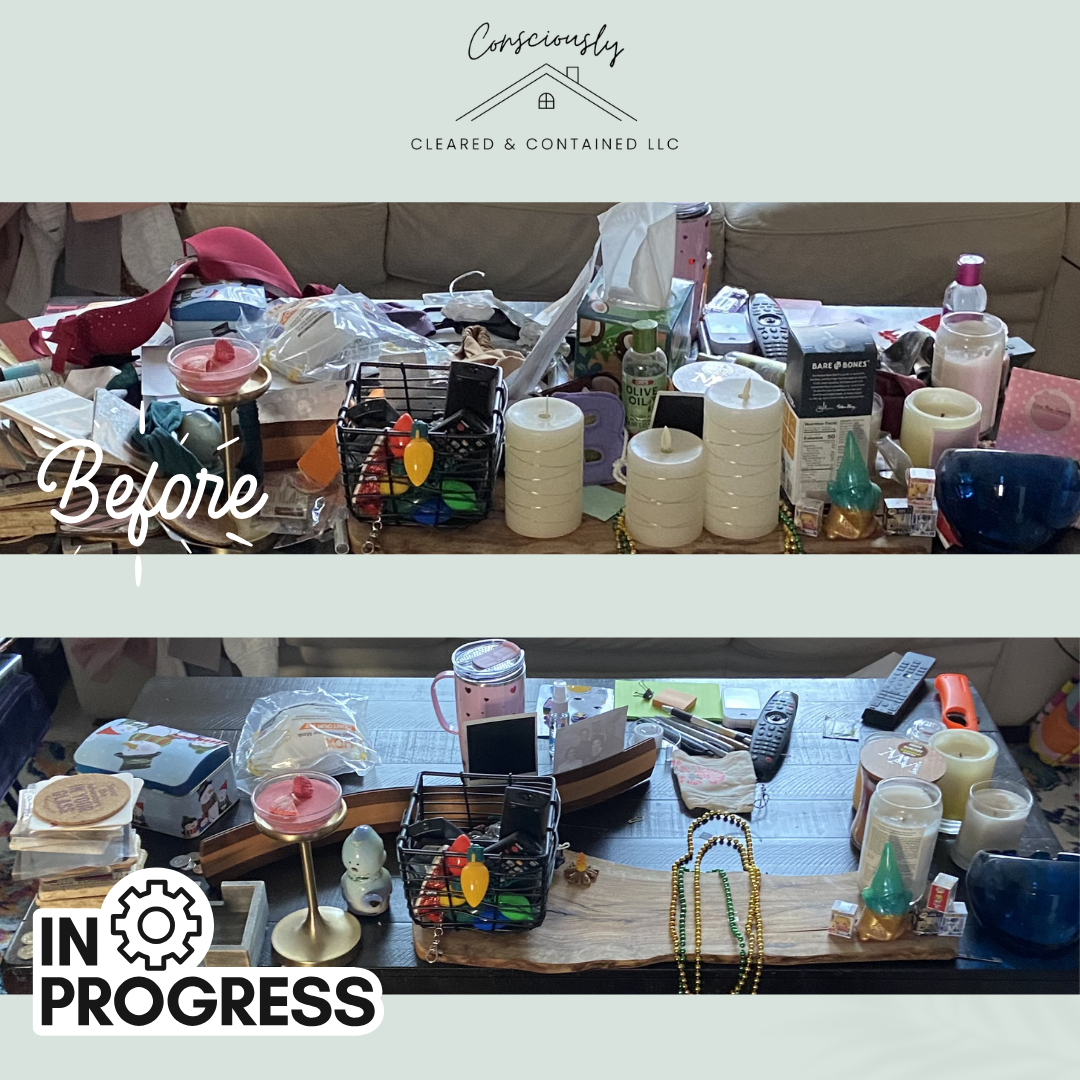
A ten-minute organizing burst in which we first cleared trash, grouped relocate items together (we filled a reusable bag with toiletries to be returned to the bedroom), identified a half dozen items for donation, grouped similar items together (office supplies, coasters, candles), and staged some joy-sparking items like decor and photos. She loves lighting candles and gladly donated the fake ones. Progress matters more than perfection. This is jumpstarting the process. You can do it.
Inside a Professional Organizer’s Home (In Real Time)
I’m writing this blog on my laptop at my hard-working dining table, surrounded by remnants of Easter baskets, tax-related docs, some trash, my wife’s wallet, a dirty dish or two, an errant Lego. This is real life. Why judge myself? I can observe these items as such:
trash to toss
items to relocate* in this room (dishes to the sink, candy to the cabinet)
items to relocate elsewhere in the home (Easter baskets to the holiday bin in the basement, Legos to the playroom, tax docs to our filing cabinet
This is manageable. And when I return to the function of this space—a place for my family to connect—and I can small the delicious dinner my wife is making right now that will need to be plated in 15 minutes or so, I know that taking a few minutes to address these trash and put-away items will be painless and worth the effort.
Which moves make the biggest impact? Putting all the candy in a large bowl in the cabinet is going to make a much more visible and meaningful dent than putting the two small Minecraft Legos away. Starting with something that’s going to show you immediate results is a quick win.
I can clear this table by myself, no sweat. I am also raising a tiny human who is capable of helping, whose training also includes the first act of noticing. I can delegate developmentally appropriate tasks—and I did, though to confess, I could have timed it better since I interrupted a Mario Kart race. Yes, it’ll take a little longer, but the practice matters.
* It’s important to note that as a certified professional organizer all of these items already HAVE homes. Most of my clients don’t have designated spaces to house these items, and therefore they roam, get misplaced, and are hard to locate when you need them. Part of organizing is finding an intuitive spot where you will know to get what you need—but more importantly one that’s easy to put away the item after use. (And while I’m here, that everyone is aware of—for example, my wife could take the Easter baskets to the basement and know where they go, that mental load of where things belong is not all on me).
Setting Yourself Up for Small Wins
If you live in chaos and it feels overwhelming, put 3 things in each cluttered space:
A trash can—for trash/recycling
A box or bag—for donations
An empty tub or laundry basket—for relocating items (this is not “shuffling shit around”; it’s moving items closer to where they belong/where they’re used, and putting them away); it can be helpful to have a relocate bin for first floor, second floor etc.
And tell the people who live with you what these are for. “If you see something of yours in this relocate basket, grab it and put it away,” or “Trash goes in this white bag.”
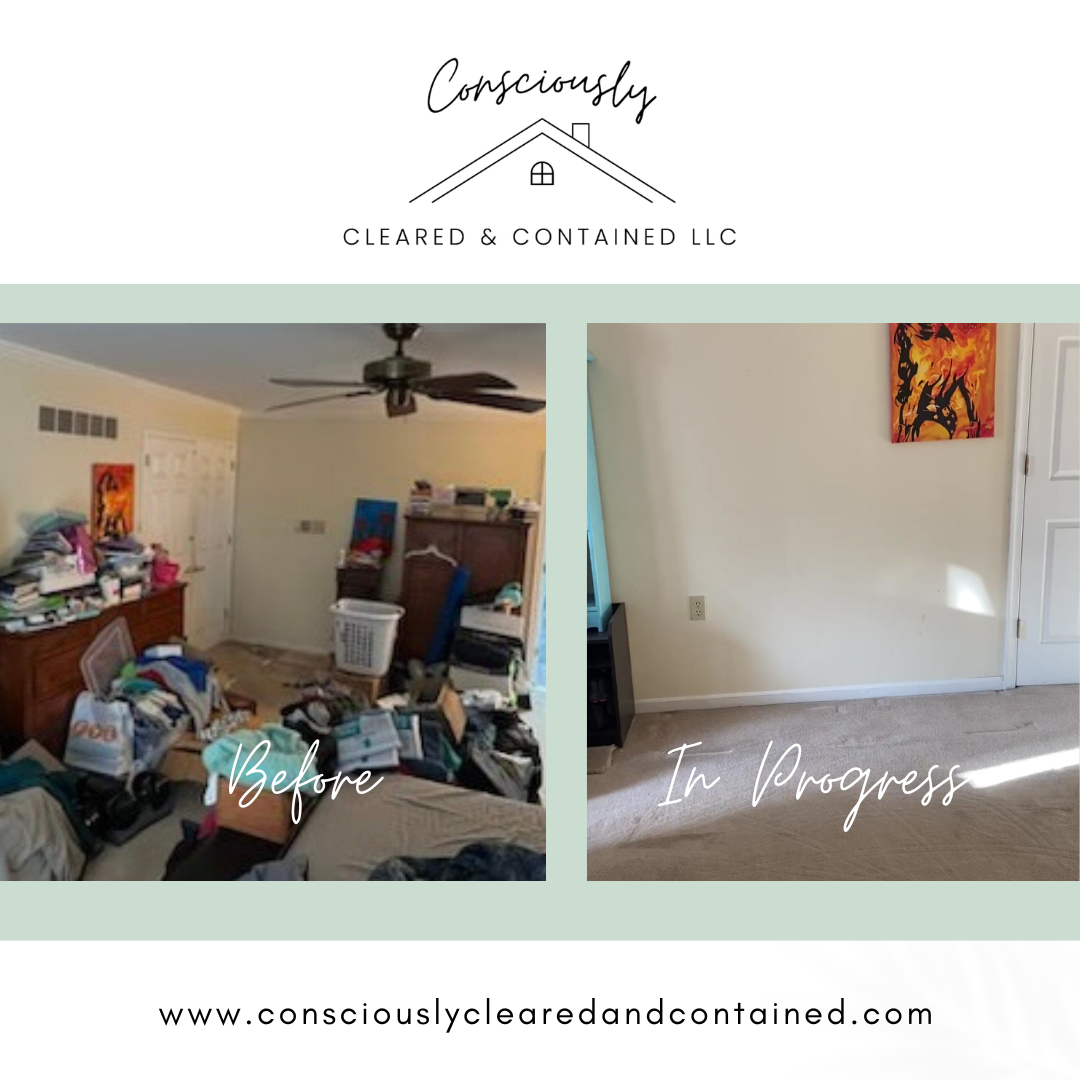
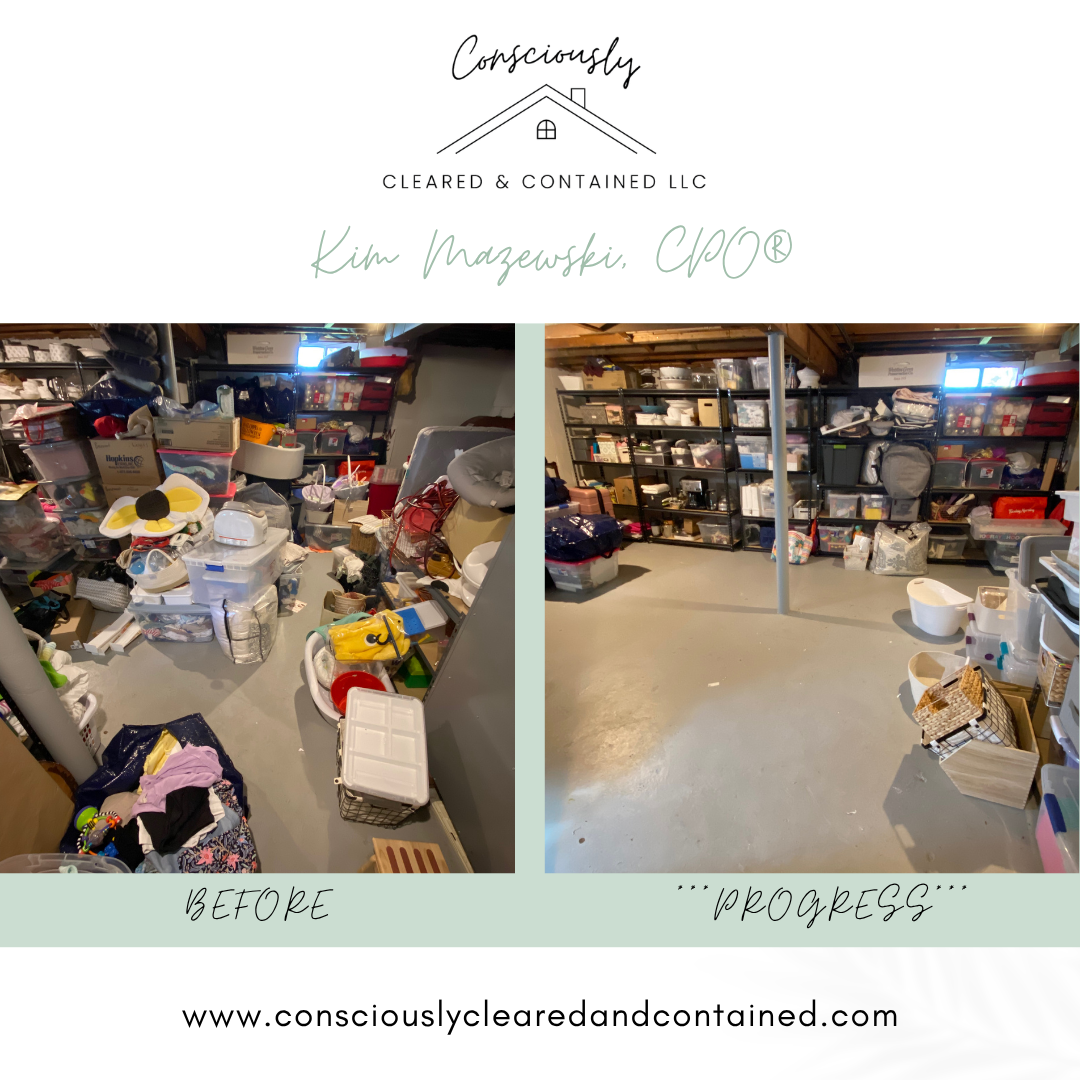
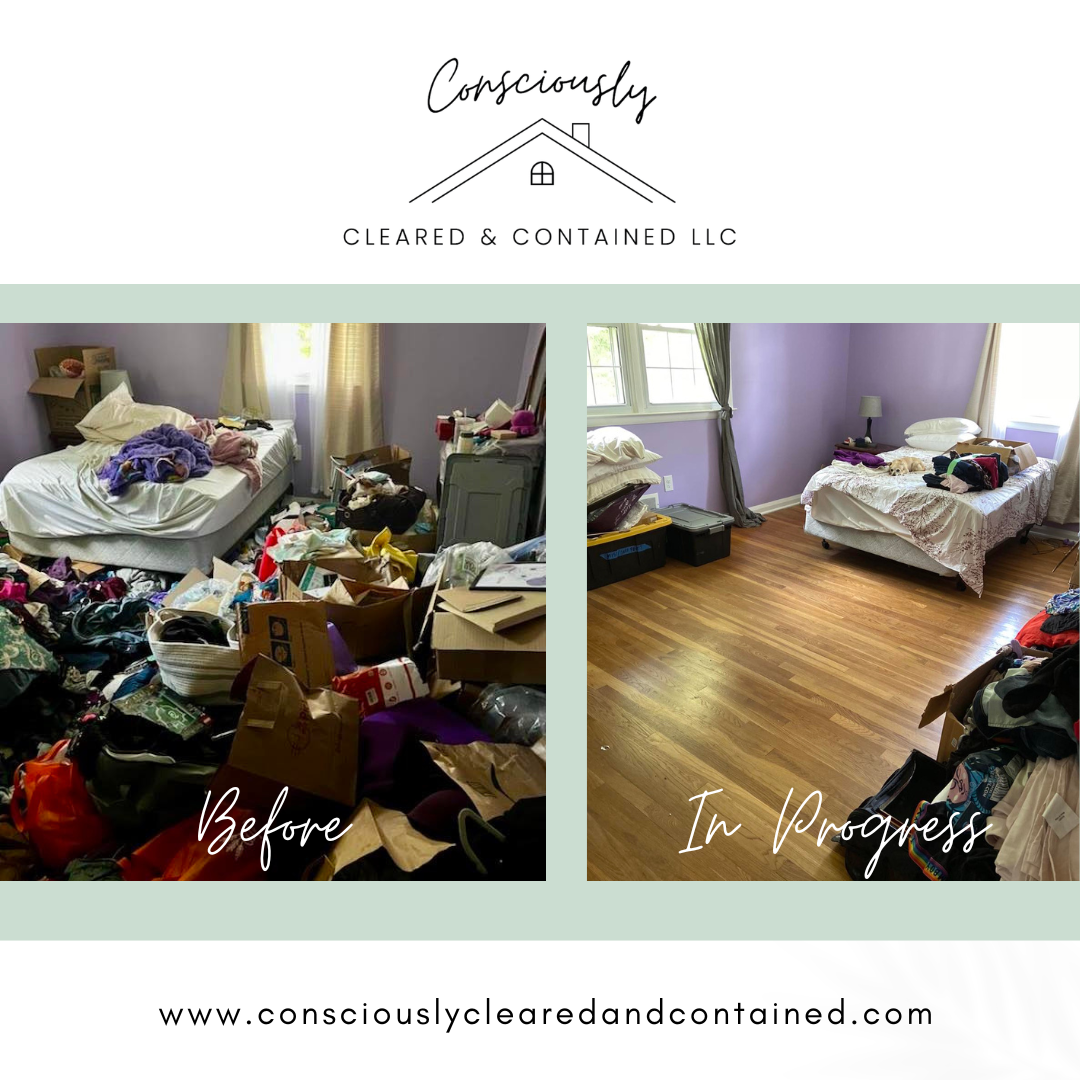
No rush to fill these. No pressure to act on them right this instant. No judgment if you start and stop and start and stop. But setting yourself up to take small action steps forward is positioning you to take back control of your spaces. Practice makes progress. We are aiming for better than this, not perfection.
A Gentle Nudge Toward Decluttering, Toward Less
The fewer items you own, the less you have to manage. Which means MORE time for play, rest, connection, and whatever else matters most to you.
As you categorize, notice
what you don’t actually love
what you don’t actually use
what you don’t need or even want (anymore)
what you have kept . . . all this time . . . because it was expensive, it was a gift, it was handmade, it is a perfectly good x, it is aspirational, there’s nothing wrong with it, etc.
Give yourself explicit permission to pass these items on. Releasing items you don’t love, use, or need—and especially if you’ve kept them for the wrong reasons—is liberating. And you’ll feel instant relief in their absence as you open up more breathing room.
If permanently removing these items feels too much too soon, box them up and put them in an indecision bin out of sight. Put a date on the calendar to revisit, and if you haven’t missed them, take it to your donation center of choice (or ask someone else to help move it out).
Starting Where You Are Requires One Thing
It requires literally starting. Doing one thing.
Even when you don’t want to, even when there’s no motivation, tons of distractions, 602930 things you’d rather be doing.
Do one thing like
notice yesterday’s coffee mug and walk it to the dishwasher
donate a candle whose scent makes you nauseous (and it’s dusty since you’ve never even lit it)
break down the empty cardboard box that’s been sitting by your front door and take it to the recycling bin
Do that one thing—the first thing you see (that feels easy and conquerable), and if you feel good afterward, do another. This is life—breaking up the stagnancy that is clutter and tidying your home to create a place you love and are supported by. These small wins matter, they add up, and they are doable. You’ve got this!
What will you toss first?
Compassionate help is here if you want to speed things up...book a FREE discovery call to learn more about how I can help you get unstuck.